SRHE Blog
A research-led blog that checks claims about higher education policy, teaching, and digital change through published studies and named scholars.
Introduction
Finding reliable writing about higher education is hard. Many posts make big claims about policy, teaching, or technology with weak proof. Readers who need evidence often face opinion pieces that skip data, dates, or sources. This problem grows sharper with topics like AI, where hype moves faster than research.
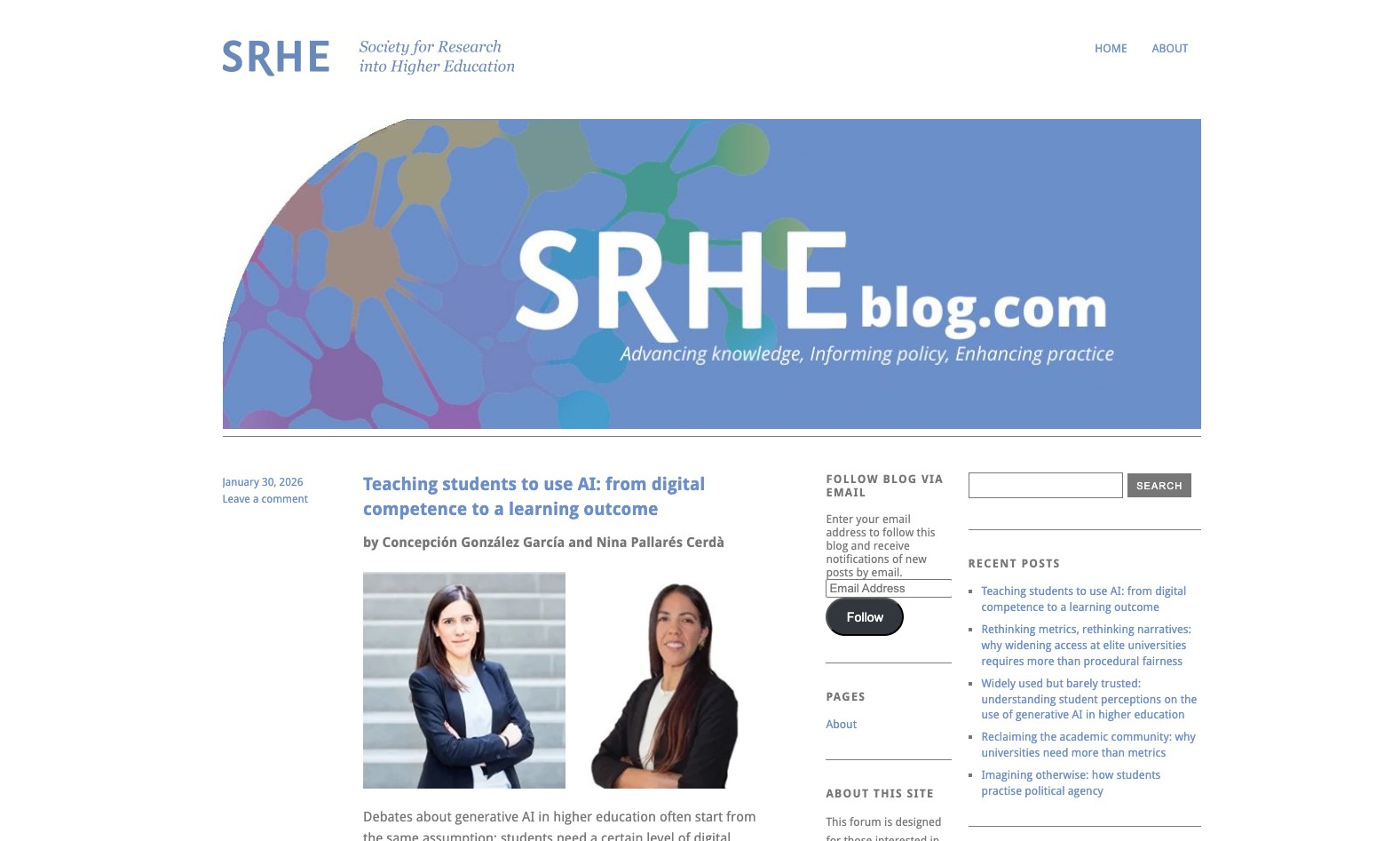
The SRHE Blog aims to solve this gap. It publishes work from named scholars such as Concepción González García, Nina Pallarés Cerdà, Ian McNay, and other members of the Society for Research into Higher Education. Posts link to studies, name methods, and cite years and frameworks like DigComp. The blog serves readers who need claims checked against research. These include higher education staff, policy analysts, doctoral students, and leaders who must judge ideas before they act.
The need here is not inspiration. The need is verification. Readers come to see whether a claim stands up when matched with data, methods, and limits. The blog positions itself as a place where arguments show their working, not just their conclusions.
Site Preview
Topics Covered
- Higher education policy
- Teaching and learning research
- Digital skills and AI in universities
- Governance and leadership
- Equity and access
Content Style
The writing style is academic but controlled. Sentences stay clear and avoid hype. Authors explain terms and frameworks before use. Posts assume an informed reader yet avoid jargon overload.
Why I Recommend This Blog
SRHE Blog tests claims against published research and named evidence. I read posts with a habit of tracing citations and dates. This blog makes that possible. Authors state sample sizes, methods, and limits. In the AI and digital skills post, the writers describe a randomised trial, the DigComp 2.2 framework, and measured effect sizes. These details allow a reader to judge strength rather than trust tone.
When I check accuracy, I look for balance between results and caution. This blog avoids sweeping claims. The AI study reports gains with percentage points and notes where effects look weaker. It also separates outcomes by prior skill level. That matters for policy readers who fear overreach. The post does not claim AI fixes everything. It claims improvement under set conditions.
Another reason I recommend it comes from consistency. Across years, posts follow the same pattern of evidence use. Older entries on alternative providers or governance also name cases, dates, and ownership facts. That record builds trust. I see fewer errors of scale or scope than on most higher education blogs.
Best For
Best for readers who need evidence to support decisions. This includes policy staff, senior leaders, researchers, and doctoral students who check sources before they agree.
Pros & Cons
Pros
- Strong use of citations, dates, and named frameworks
- Authors identify methods and limits of studies
- Claims stay close to data
- Long archive that allows cross-checking over time
Cons
- Reading effort is high for non-academic audiences
- Few visual summaries of data
- Comment sections show low public debate
Alternatives
Share This Listing
Related Blogs

U Plus Education Blog
Led by a rotating group of co-op students such as Louis, Arina, Nuoheng, Max, Kathir,…

The Chronicle of Higher Education
The Chronicle runs on a large editorial bench. Karin Fischer covers global education. Dan Bauman…

Strathclyde Institute of Education Blog
Started as a public outlet for the Institute of Education at the University of Strathclyde,…