
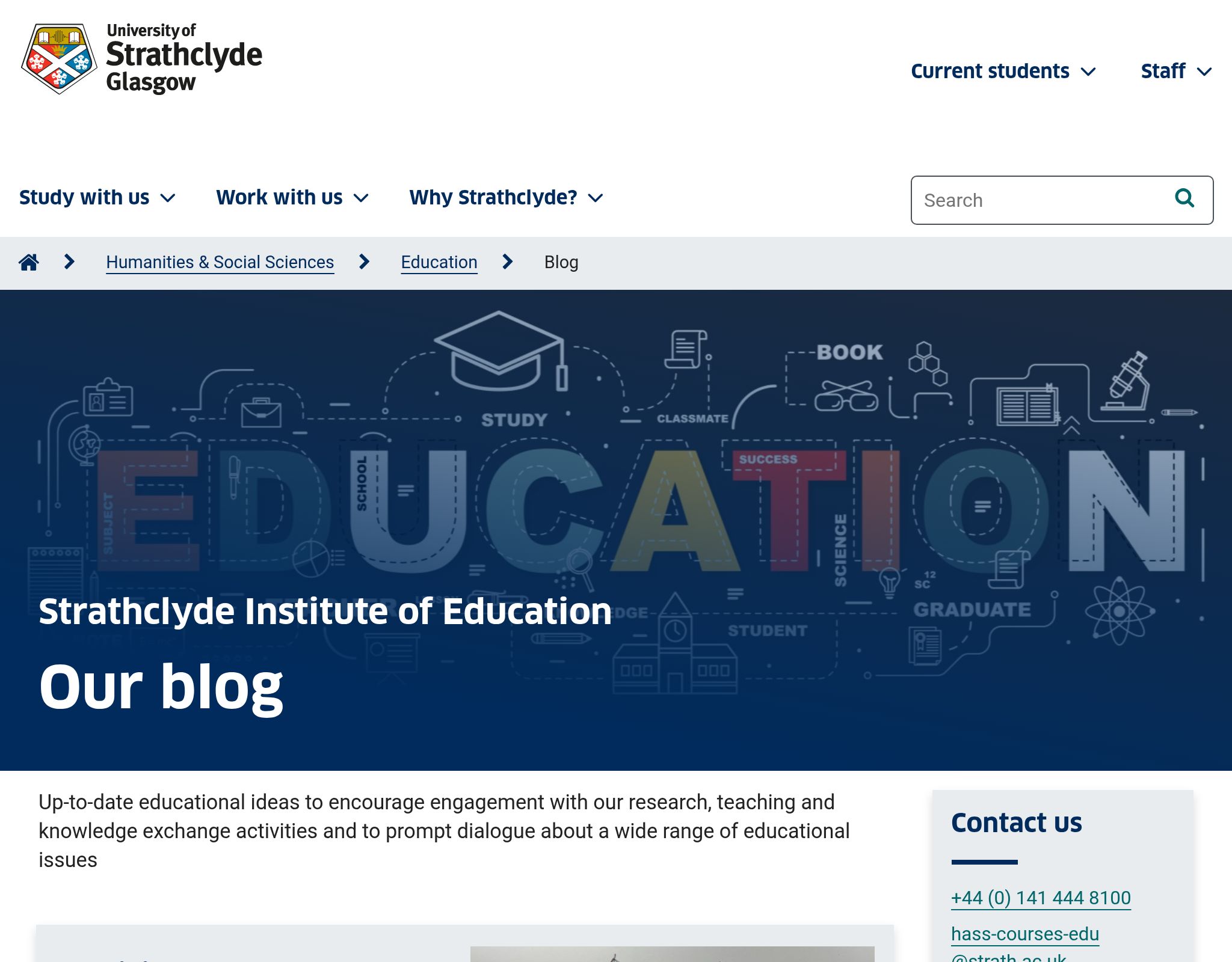
Strathclyde Institute of Education Blog
An academic education blog from the University of Strathclyde that tests ideas in public and exposes weak thinking before it spreads.
Introduction
Started as a public outlet for the Institute of Education at the University of Strathclyde, this blog grew out of staff research notes and course debates. It sits under a formal university site and follows academic cycles rather than trends. Posts come from named staff and students such as Jonathan Firth, Paul Wickham, Yvette Taylor, Catriona Robb, John Cochrane, John Winter, and Kayleigh Charlton. The origin matters because it explains the tone. This is not marketing copy. It reads like work notes shared out loud.
The audience is clear once you read three posts. It serves educators, researchers, and policy staff who fear shallow claims. These readers need slow thinking, source driven arguments, and public testing of ideas before they reach classrooms or reports. It also fits students who want to see how academic staff argue in real time rather than polished journals.
The blog history inside a university system shapes limits too. Posts follow term rhythms and staff interests. There is no chase for clicks. That reduces noise but also narrows scope.
Site Preview
Topics Covered
- Teacher education theory
- Higher education practice
- Social justice in education
- Learning theory
- Education policy reflection
Content Style
Academic, reflective, and slow. Posts read like extended arguments rather than advice notes.
Why I Recommend This Blog
Strathclyde Institute of Education Blog reduces errors by showing unfinished thought. I read it to catch weak links in popular education claims before they harden into policy talk. The posts expose doubts, limits, and theory gaps. That alone prevents misuse. I watch how authors name what they do not know.
My habit is to check authorship and context first. Here each post states who writes and why. That cuts the risk of lifting claims out of place. When Jonathan Firth questions lectures or learning focus, he frames the claim inside education theory rather than slogans. That protects readers from false certainty.
Another reason sits in topic choice. Pieces on queer working class knowledge, feminist methods, or language status force careful reading. I slow down on purpose. That pause helps avoid bad shortcuts. The blog does not give tools or lists. It gives caution. For readers who fear copying trends without proof, that restraint matters.
Best For
Educators, researchers, and students who want to avoid shallow teaching ideas and policy errors.
Pros & Cons
Pros
- Clear author names and roles reduce misuse of ideas
- Strong theory focus blocks trend driven mistakes
- Public doubt and limits help readers check assumptions
- University setting adds accountability
Cons
- Not useful for quick classroom tips
- Irregular posting gaps reduce momentum
- Dense language may block casual readers
- Narrow focus tied to staff interests
Alternatives
Share This Listing
Related Blogs
SRHE Blog
Finding reliable writing about higher education is hard. Many posts make big claims about policy,…

The Chronicle of Higher Education
The Chronicle runs on a large editorial bench. Karin Fischer covers global education. Dan Bauman…

U Plus Education Blog
Led by a rotating group of co-op students such as Louis, Arina, Nuoheng, Max, Kathir,…